




IRS Notice Help & Explanations
IRS Notice Help & Explanations
IRS Identity Verification Letters (4883C, 5071C, 0012C) Explained: What to Do If the IRS Flags Your Return
IRS Identity Verification Letters (4883C, 5071C, 0012C) Explained: What to Do If the IRS Flags Your Return
If you received IRS Letter 4883C, 5071C, or 0012C, it does not automatically mean you did something wrong.
It usually means the IRS flagged your return to verify your identity before processing your refund.
These letters are part of the IRS’s effort to prevent identity theft and fraudulent tax filings. While frustrating, they are often resolvable quickly if handled correctly.
Why Did the IRS Send This Letter?
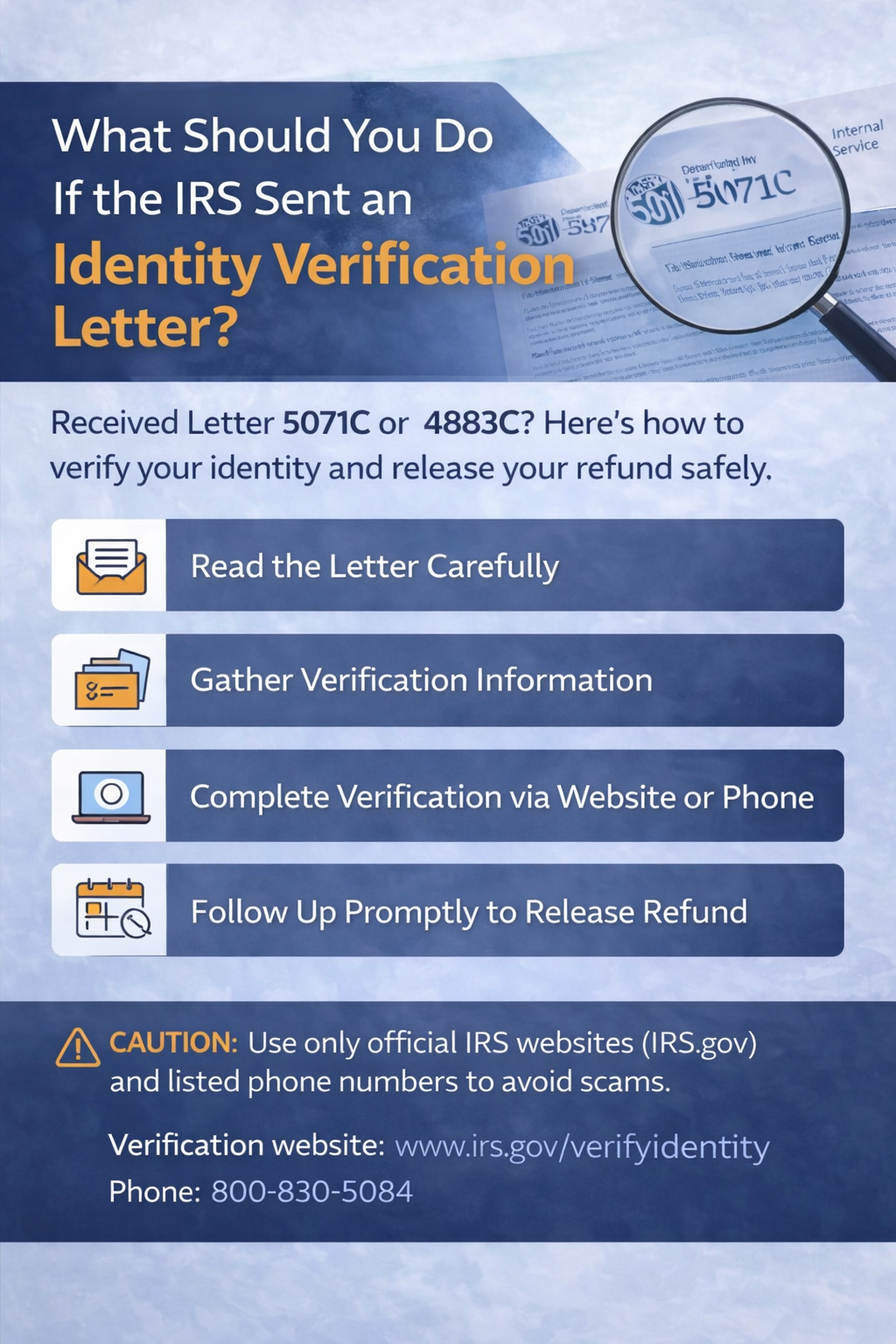
The IRS may flag your return if:
- Your return shows unusual income changes
- Your filing information doesn’t match prior records
- Multiple returns were filed using the same Social Security number
- The IRS suspects identity theft
- Certain credits triggered additional review
In most cases, your refund is simply on hold until your identity is confirmed.
What Is Letter 5071C?
Letter 5071C is typically sent when the IRS needs you to verify your identity online or by phone.
The letter instructs you to:
- Visit the official IRS identity verification website
- Confirm specific details from your tax return
- Verify personal information
Once verified successfully, the IRS will resume processing your return.
What Is Letter 4883C?
Letter 4883C usually requires you to call the IRS directly to verify your identity.
You may be asked to confirm:
- Prior-year tax return details
- Current return information
- Personal identification data
After verification, your return can move forward in processing.
What Is Letter 0012C?
Letter 0012C is often sent when additional information or documentation is needed before processing can continue.
This may involve:
- Missing forms
- Income verification
- Supporting documents
- Clarification of certain credits
Responding quickly helps prevent extended refund delays.
Is This a Scam?
Identity-related IRS letters cause understandable concern — especially given the rise in tax scams.
To protect yourself:
- Do not click links in unsolicited emails
- Only use official IRS.gov websites
- Verify phone numbers directly from IRS.gov
- Do not provide sensitive information to unknown callers
If you are unsure whether your letter is legitimate, professional review can help confirm its authenticity.
Will This Delay My Refund?
Yes — your refund will typically be paused until identity verification is completed.
After successful verification:
- Processing resumes
- Refund timing depends on IRS workload
- Additional review may still occur in some cases
The faster you respond, the sooner your return moves forward.
What Happens If You Ignore the Letter?
Ignoring identity verification letters can result in:
- Refund denial
- Return not being processed
- Extended delays
- Increased identity theft risk
Prompt action protects both your refund and your personal information.
When Should You Seek Professional Help?
While many taxpayers can complete identity verification themselves, professional assistance may be helpful if:
- You suspect identity theft
- You did not file the return in question
- Multiple notices were received
- Your refund has been delayed for months
- The IRS claims discrepancies you don’t understand
In identity theft situations, additional protective steps may be required beyond basic verification.
How Alpine Tax Resolution Can Help
At Alpine Tax Resolution, our team helps taxpayers navigate IRS correspondence with clarity and confidence.
If you receive Letter 4883C, 5071C, or 0012C, we can:
- Confirm the notice is legitimate
- Review your filed return for discrepancies
- Assist with proper verification steps
- Identify potential fraud concerns
- Communicate with the IRS when necessary
Javier and the Alpine Tax Resolution team understand how stressful IRS letters can feel — especially when refunds are involved. Our goal is to ensure your return is properly processed while protecting your identity.
Final Thoughts
IRS identity verification letters are protective — not punitive.
They are designed to prevent fraud, not accuse you of wrongdoing.
However, ignoring them can create unnecessary delays and complications.
If you’ve received one of these letters and are unsure how to proceed, timely and informed action is the best next step.


Have questions or need guidance? Send us a message and our team will reach out with next steps...
Thank you! Your submission has been received!
Oops! Something went wrong while submitting the form.